How Excavator Magnets Increase Scrap Yard Productivity
A technical breakdown of how excavator-mounted electromagnets improve loading speed, reduce labor, and increase daily throughput in scrap operations.
Featured

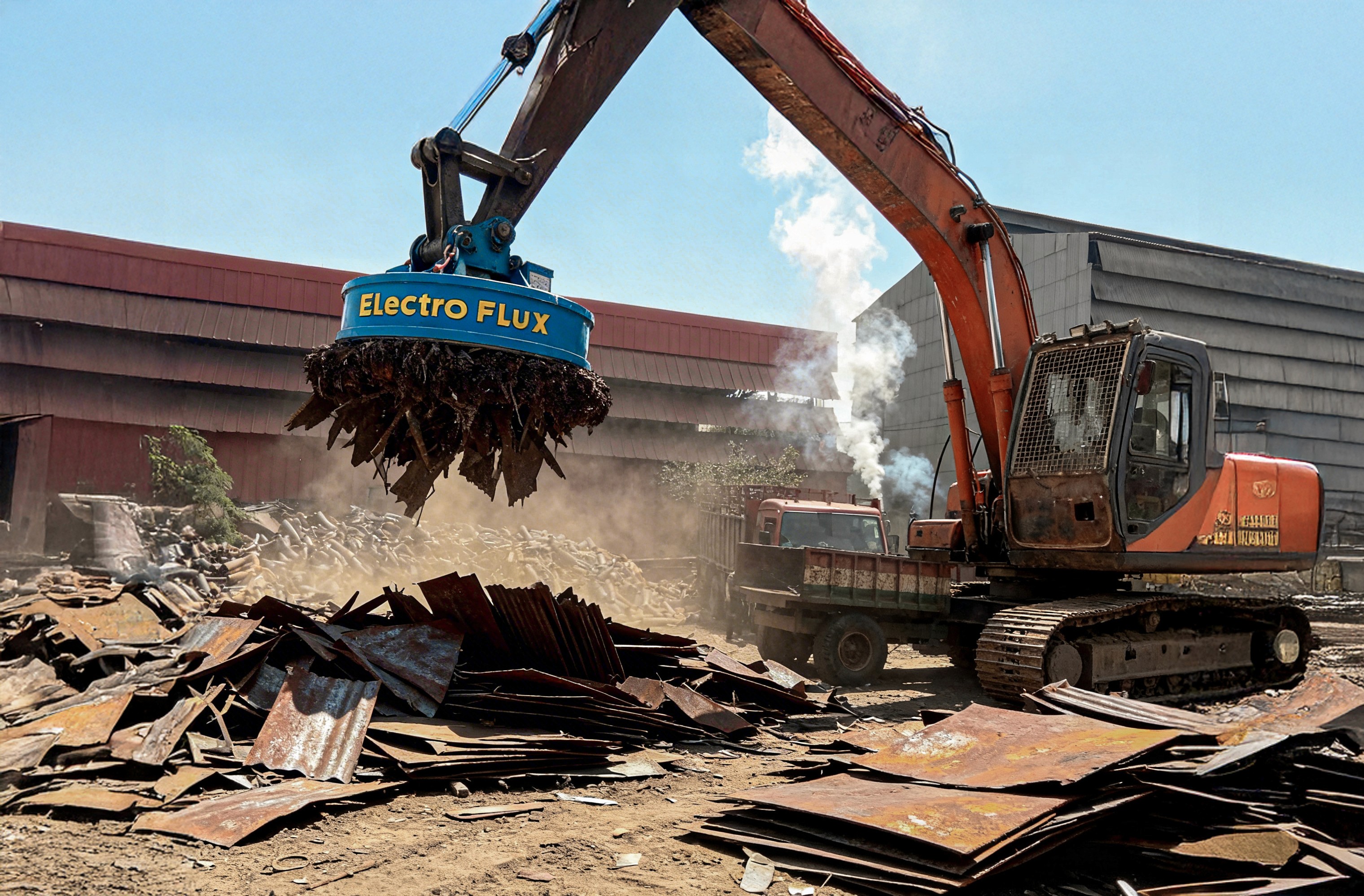
Scrap yards operate on cycle time. The faster material moves from ground to truck, the higher the revenue per day. Excavator-mounted electromagnets directly impact this efficiency by reducing manual sorting and mechanical gripping limitations.
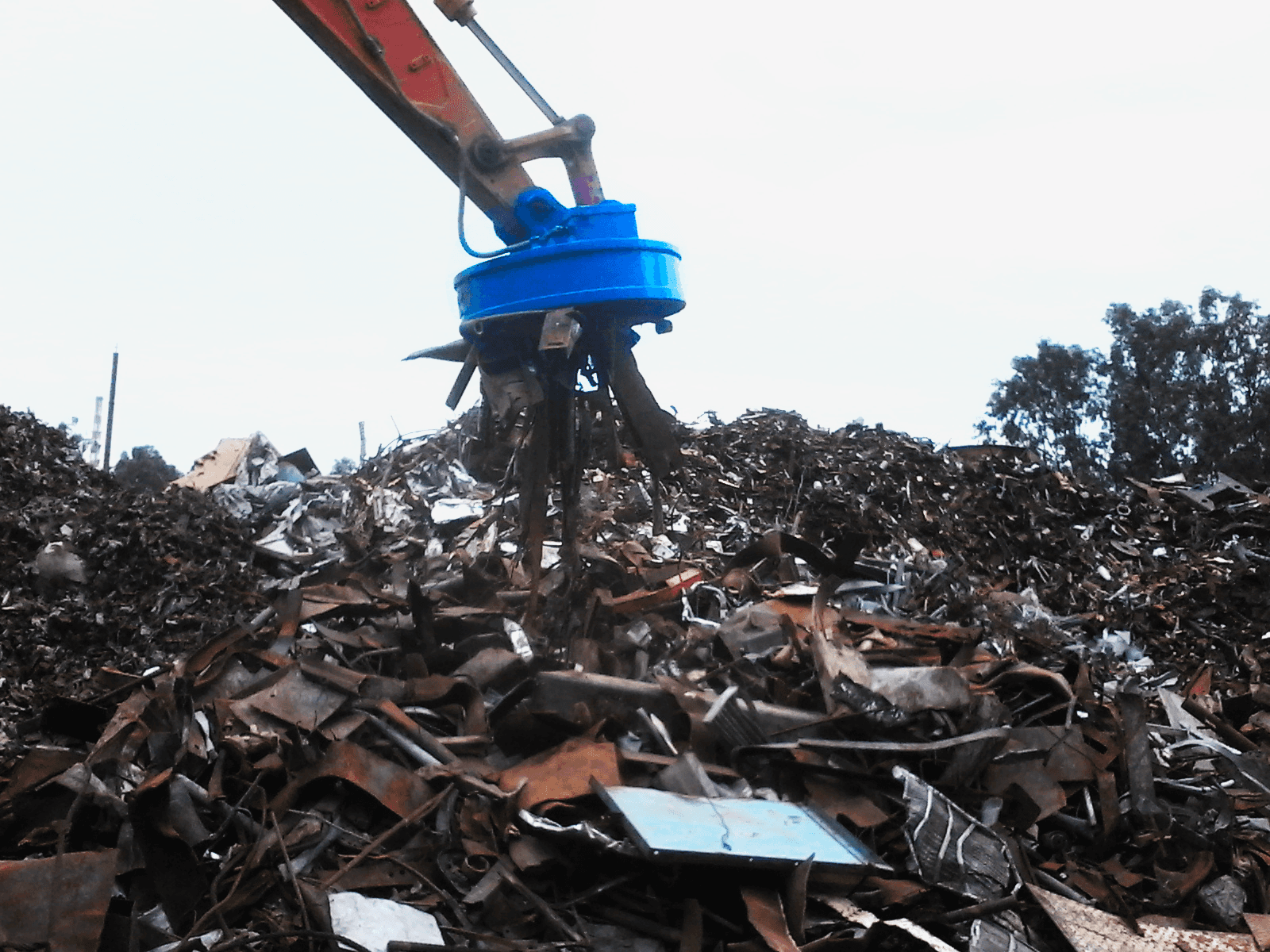
Unlike grapples, electromagnets can pick irregular ferrous scrap in a single lift without precise alignment. This reduces repositioning time and increases pickup density per cycle.
Key operational advantages include:
Faster truck loading
Reduced idle time
Lower manpower dependency
Better scrap segregation
Improved site safety
With proper sizing and magnetic flux optimization, an excavator magnet can significantly increase daily tonnage handled without increasing equipment size.
Industrial operations that rely on speed and volume see measurable productivity gains when switching from mechanical handling to magnetic lifting systems.