Excavator Magnets vs. Mechanical Grapples: A Performance Comparison

A technical comparison of magnetic lifting systems and traditional grapples in scrap handling applications.

Insight
A faint blue cloud

Both grapples and magnets are used in scrap handling — but they serve different operational goals.

Mechanical Grapples

  • Require physical grip

  • Better for non-ferrous or bulky objects

  • Slower cycle time for loose scrap

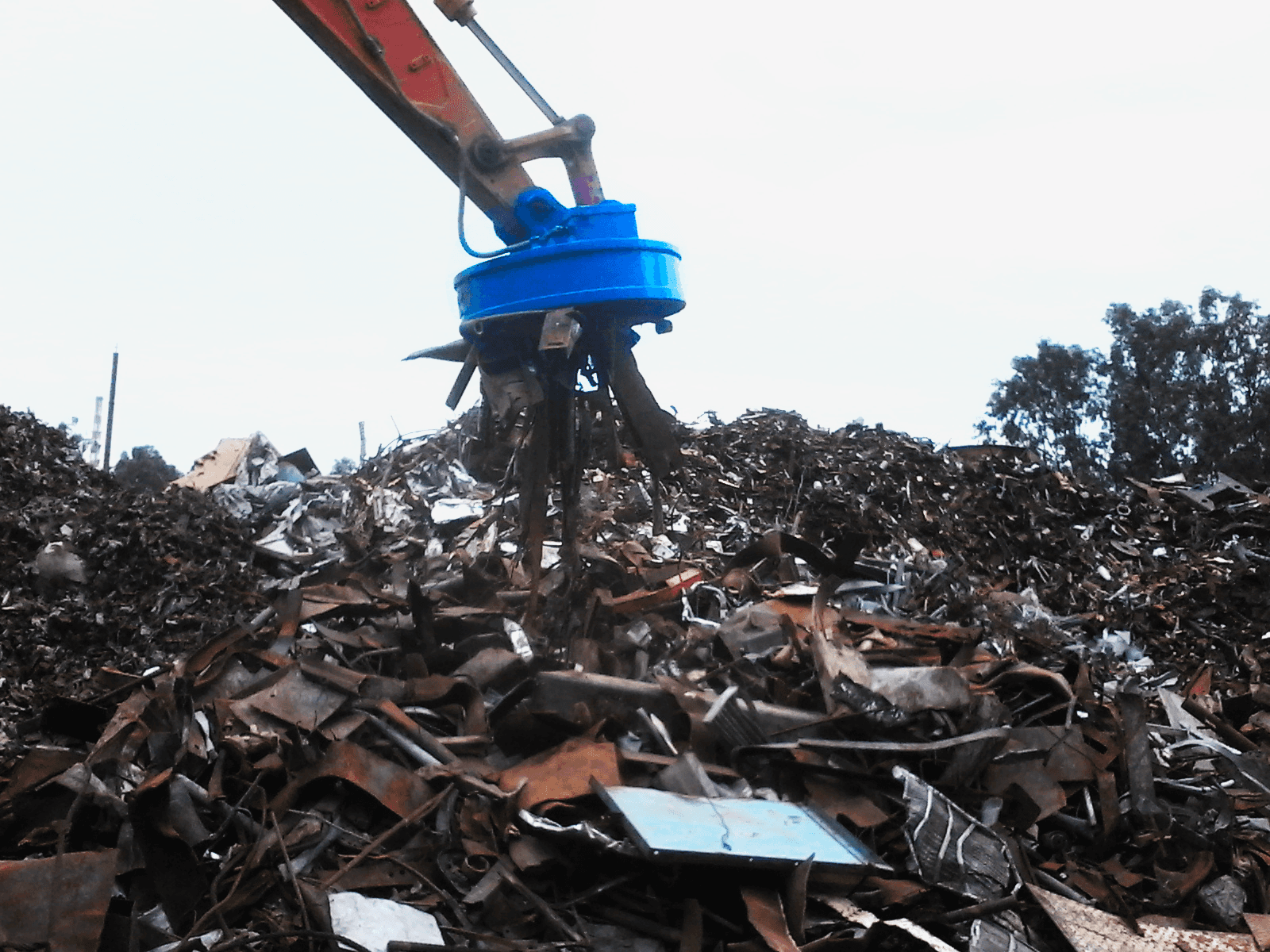
Excavator Magnets

  • Instant magnetic pickup

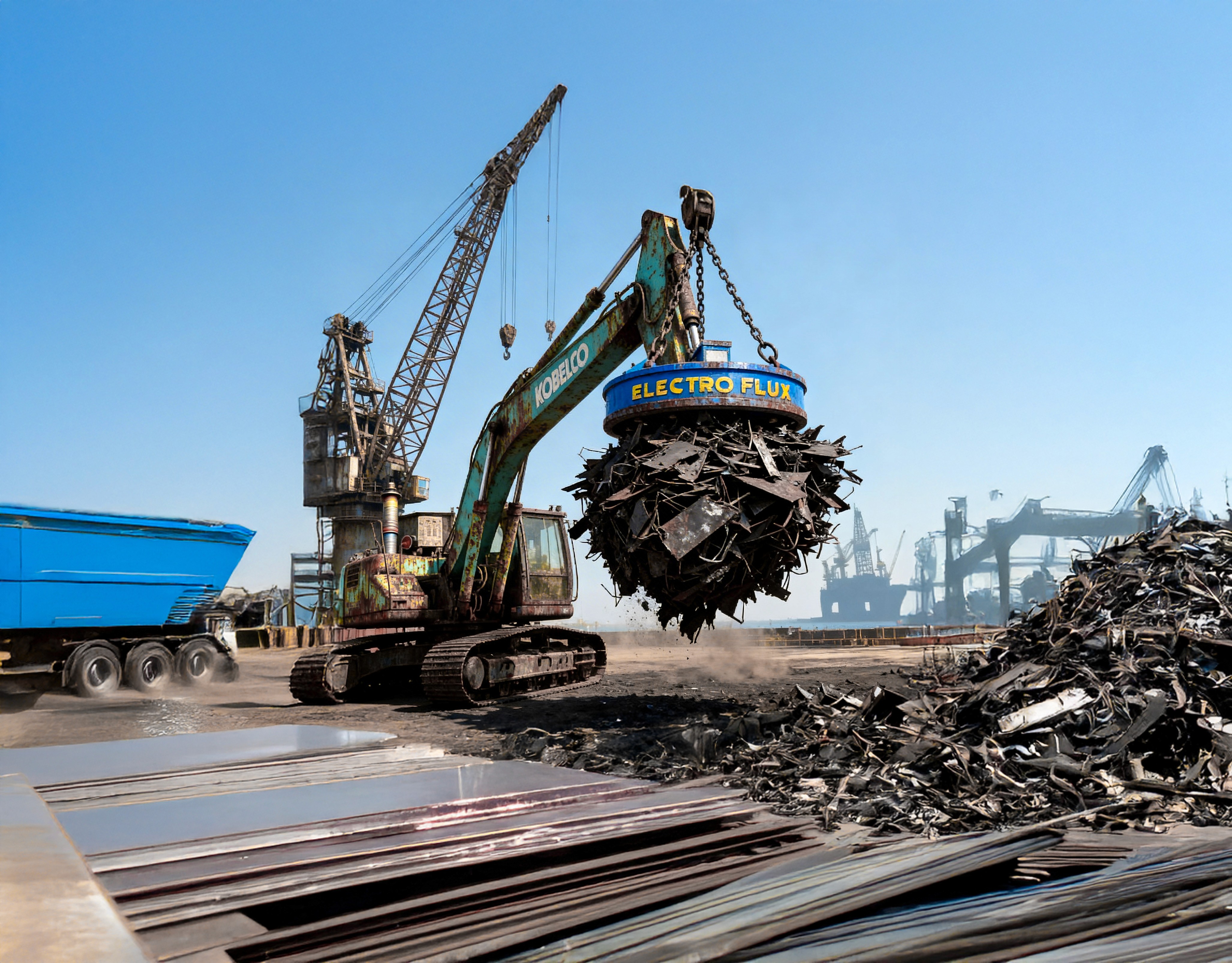
  • Ideal for ferrous scrap

  • Faster loading cycles

  • Better for mixed and irregular material

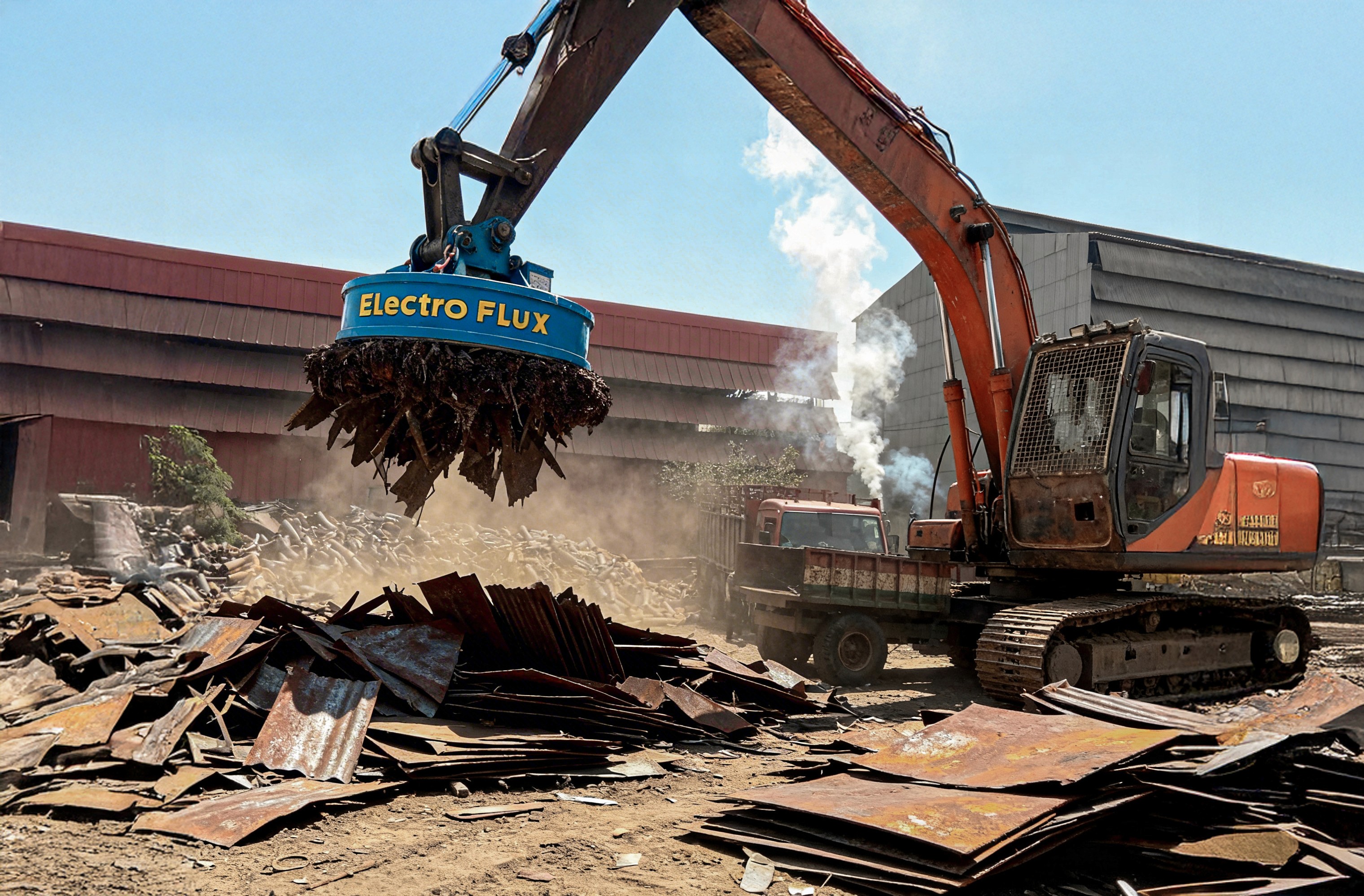
Magnets reduce repositioning effort and improve pickup density, especially in demolition sites where scrap is scattered.

For operations primarily handling ferrous materials, electromagnets provide superior cycle efficiency and lower handling complexity.
FAQs

What is an excavator electromagnet?

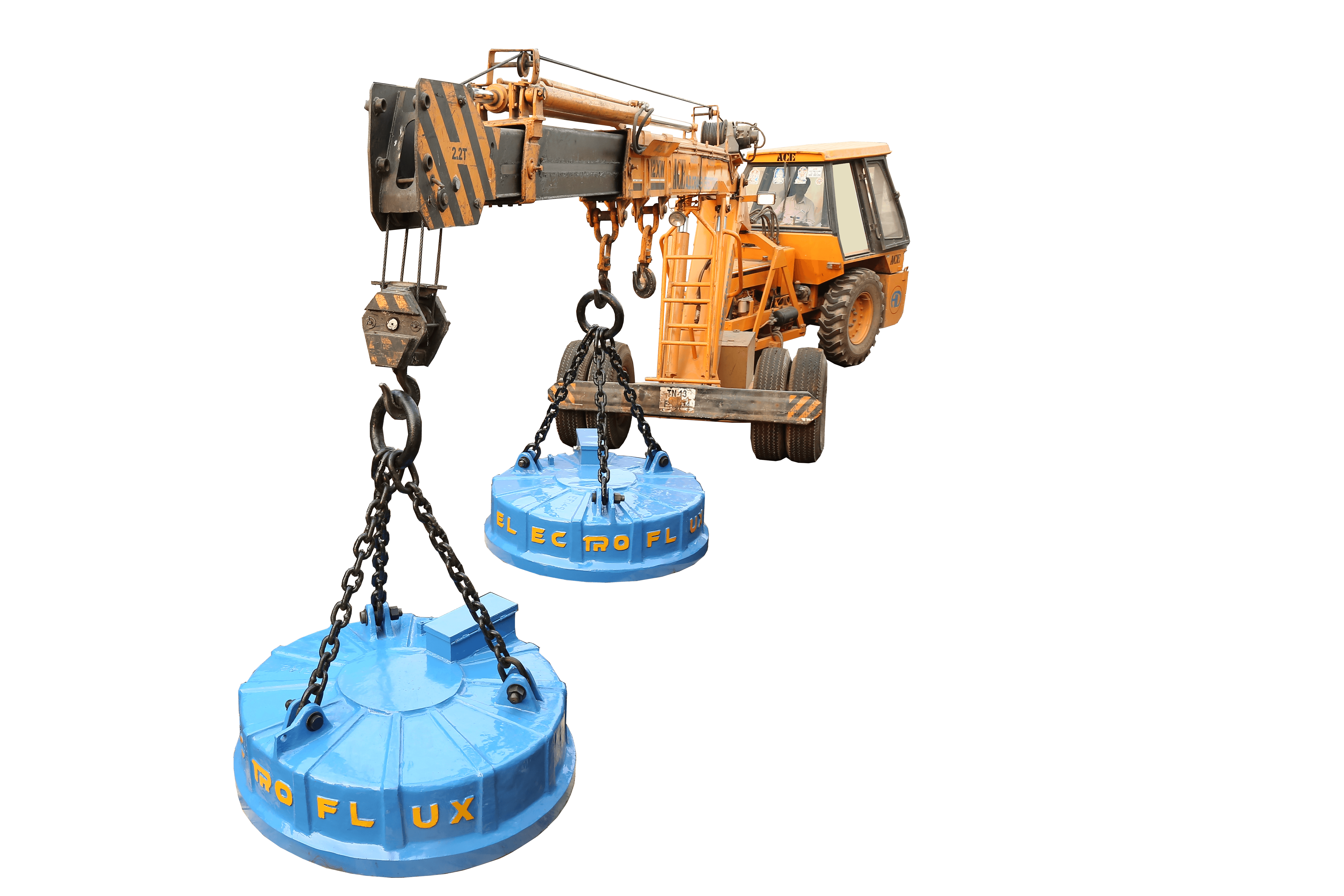
An excavator electromagnet is a magnetic attachment for excavators that lifts and moves ferrous materials like scrap metal, steel plates, and rods. It can be switched on and off for safe handling.

What types of excavator electromagnets are available?

Types include flat lifting plates, circular/disc magnets, permanent magnets, hydraulic or electric magnets, and custom-designed magnets for specific industrial needs.

How do excavator magnets work?

They create a magnetic field when powered by electricity, attracting ferrous materials. Switching off the current releases the load safely.

What are the main benefits of using an excavator magnet?

Benefits include faster material handling, improved safety, precise lifting, versatility across industries, durability, and reduced labour costs.